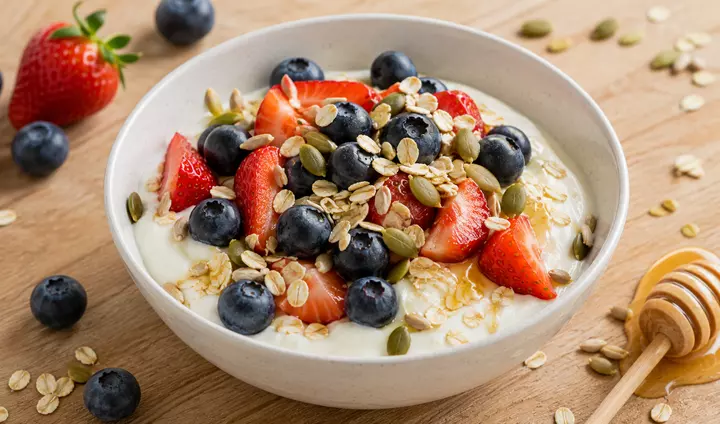
High-Protein Greek Yogurt Bowl With Berries and Seeds
Cuisine type: American
Start to Finish: 5 minutes
Servings: 1
This high-protein, low-fat snack bowl is a smart choice for anyone managing muscular dystrophy, especially those on corticosteroids, which can increase appetite, promote weight gain, and raise the risk of bone density loss. A single serving of nonfat plain Greek yogurt provides an excellent source of protein. Protein intake is a priority at every stage of muscular dystrophy to help preserve muscle mass. Because corticosteroids are commonly used to treat many forms of muscular dystrophy, it’s worth knowing more about the side effects of steroid treatment.
Ingredients
- 1 cup plain nonfat Greek yogurt
- 1/4 teaspoon pure vanilla extract
- 1 teaspoon pure honey or pure maple syrup
- 1/2 cup fresh or thawed frozen mixed berries (blueberries, raspberries, or sliced strawberries)
- 1 tablespoon raw pumpkin seeds (pepitas)
- 1 tablespoon raw sunflower seeds
- 1 tablespoon old-fashioned rolled oats (uncooked, for texture — optional)
Instructions
- Spoon 1 cup of plain nonfat Greek yogurt into a bowl wide enough to hold all of the toppings comfortably.
- Add 1/4 teaspoon of pure vanilla extract directly to the yogurt and stir thoroughly until fully incorporated.
- Drizzle 1 teaspoon of honey or maple syrup over the yogurt, and stir again to combine the sweetener evenly throughout the base.
- Rinse the fresh berries under cool running water in a small colander, and gently pat them dry with a clean paper towel.
- Arrange the berries evenly across the surface of the yogurt, distributing them so each bite will include some fruit.
- Sprinkle 1 tablespoon of raw pumpkin seeds and 1 tablespoon of raw sunflower seeds over the berries.
- If using rolled oats, scatter 1 tablespoon evenly over the toppings to add a mild, nutty crunch and a small amount of additional fiber.
- Serve immediately for the best texture, as the seeds and oats will soften the longer they sit in contact with the yogurt.
Nutritional information (per serving): Calories: 260 | Protein: 22 grams | Carbohydrates: 28 grams | Fiber: 4 grams | Fat: 6 grams | Sodium: 85 milligrams
Suitable for: Bone-health-supportive diet, Gluten-free diet (when omitting oats or using certified gluten-free oats), High-protein diet, Low-fat diet, Low-sodium diet, Vegetarian diet
References
- Protein Intake in Duchenne Muscular Dystrophy — UMass Memorial Medical Center
The AI-generated recipes on this page are not a
substitute for medical advice. These services are not intended to diagnose, treat, or cure any
condition or disease. Always ask your doctor about specific health concerns.

Looking for delicious, healthy recipes? Find your next meal here.
Share




 Join

 Your Privacy Choices